‘Be’ Verbs क्या होते हैं? (कक्षा में बातचीत)
अमित सर: शुभ प्रभात, बच्चों! आज हम अंग्रेज़ी के सबसे बुनियादी और महत्वपूर्ण Verbs के बारे में बात करने जा रहे हैं: Be Verbs।
रोहन: शुभ प्रभात, सर! ये “Be” verbs क्या होते हैं? क्या ये run या eat जैसे सामान्य एक्शन वर्ब्स (action verbs) से अलग होते हैं?
अमित सर: बहुत बढ़िया सवाल, रोहन! हाँ, ये बिल्कुल अलग होते हैं। Be verbs में am, is, are, was, were, be, being, और been शामिल हैं। एक्शन वर्ब्स की तरह ये किसी काम (action) को नहीं दर्शाते। इसके बजाय, इनका उपयोग किसी स्थिति (state), दशा (condition), या पहचान (identity) को बताने के लिए किया जाता है। सरल शब्दों में, Be verbs हमें यह बताते हैं कि कोई व्यक्ति या वस्तु क्या है, कोई कैसा महसूस करता है, या कोई चीज़ कहाँ है।
प्रिया: सर, इसे हम हिंदी में कैसे समझ सकते हैं?
अमित सर: हिंदी में, प्रिया, Be verbs (am, is, are, was, were आदि) हूँ, है, हैं, था, थे, थी शब्दों की तरह काम करते हैं। ये किसी काम को नहीं बताते, बल्कि यह बताते हैं कि कोई क्या है, कैसा है, या कहाँ है:
स्थिति / भावना (State / Feeling): “I am happy.” (यहाँ “am” मेरी भावना बता रहा है—मैं खुश हूँ।)
पहचान (Identity): “She is a teacher.” (यहाँ “is” उसकी पहचान बता रहा है—वह एक अध्यापिका है।)
स्थान (Location): “They are in the room.” (यहाँ “are” स्थान बता रहा है—वे कमरे में हैं।)
सही “Be” Verb कैसे चुनें? (Subject के नियम)
रोहन: सर, हमें कैसे पता चलेगा कि किस शब्द के साथ कौन-सा Be verb इस्तेमाल करना है?
अमित सर: आप Subject (कर्ता) पर ध्यान देकर इन्हें आसानी से सीख सकते हैं:
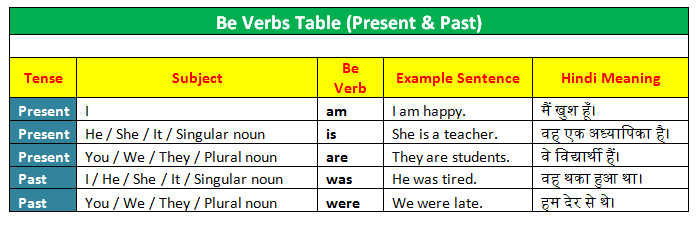
Present Tense (वर्तमान काल: am, is, are)
Am (हूँ): हमेशा I के साथ इस्तेमाल करें।
Is (है): एकवचन (singular) कर्ता के साथ इस्तेमाल करें—he, she, it, this, that, या किसी भी एक नाम के साथ।
Are (हैं / हो): बहुवचन (plural) कर्ता और second person के साथ इस्तेमाल करें—you, we, they।
Past Tense (भूतकाल: was, were)
Was (था / थी): I, he, she, it, और एकवचन नामों के साथ इस्तेमाल करें।
Were (थे / थीं): you, we, they, और बहुवचन संज्ञाओं (plural nouns) के साथ इस्तेमाल करें।
वाक्य अभ्यास के उदाहरण
अमित सर: चलिए, कक्षा के कुछ वास्तविक उदाहरणों के साथ अभ्यास करते हैं!
1. “Is” (है) वाले वाक्य
अमित सर: “He is happy.” — वह खुश है।
प्रिया: “She is a teacher.” — वह एक अध्यापिका है।
रोहन: “It is a small cat.” — यह एक छोटा बिल्ली का बच्चा है।
प्रिया: “This is my book.” — यह मेरी किताब है।
अमित सर: “That is your pen.” — वह तुम्हारा पेन है।
2. “Am” (हूँ) वाले वाक्य
रोहन: “I am ready.” — मैं तैयार हूँ।
प्रिया: “I am a student.” — मैं एक छात्र हूँ।
अमित सर: “I am at home.” — मैं घर पर हूँ।
3. “Are” (हैं / हो) वाले वाक्य
अमित सर: “You are strong.” — तुम मज़बूत हो।
रोहन: “We are friends.” — हम दोस्त हैं।
प्रिया: “They are busy.” — वे व्यस्त हैं।
अमित सर: “You are a teacher.” — आप एक शिक्षक हैं।
4. “Was” (था / थी) वाले वाक्य
रोहन: “I was tired.” — मैं थका हुआ था।
प्रिया: “He was here.” — वह यहाँ था।
अमित सर: “She was angry.” — वह नाराज़ थी।
रोहन: “It was cold.” — मौसम ठंडा था।
प्रिया: “This was my room.” — यह मेरा कमरा था।
5. “Were” (थे) वाले वाक्य
अमित सर: “You were late.” — तुम देर से आए थे।
रोहन: “We were together.” — हम साथ थे।
प्रिया: “They were happy.” — वे खुश थे।
अमित सर: “You were my best friend.” — आप मेरे सबसे अच्छे दोस्त थे।
अमित सर: देखा आपने यह कितना आसान है? अपने और अपने आसपास के बारे में छोटे-छोटे दैनिक वाक्य बनाकर आप Be verbs पर आसानी से महारत हासिल कर सकते हैं!
The 5 Core Uses of Be Verbs
Amit Sir: Now, let’s break down the 5 primary ways we use Be Verbs in everyday sentences!
1. Identity (पहचान बताने के लिए)
Amit Sir: The first use is to express Identity. Be verbs का उपयोग पहचान बताने के लिए किया जाता है, यानी यह बताते हैं कि कोई व्यक्ति कौन है या कोई चीज क्या है। अंग्रेज़ी में subject और noun को जोड़ने के लिए be verb ज़रूरी होता है।
Purpose: Used to tell who or what someone or something is.
Structure:
Subject + Be Verb + Noun
Priya: Sir, can you give us a couple of quick examples?
Amit Sir: Sure!
I am a teacher. — मैं एक शिक्षक हूँ।
She is my sister. — वह मेरी बहन है।
2. State / Condition (स्थिति बताने के लिए)
Rohan: Sir, how do we use Be Verbs to describe how someone feels or their physical state?
Amit Sir: That brings us to our second use: State or Condition. Be verbs का उपयोग किसी की शारीरिक, मानसिक या भावनात्मक स्थिति बताने के लिए किया जाता है। इसमें adjective का प्रयोग होता है जो बताता है कि व्यक्ति कैसा महसूस कर रहा है या उसकी दशा कैसी है।
Purpose: Describes a physical, mental, or emotional condition.
Structure:
Subject + Be Verb + Adjective
Examples:
I am happy. — मैं खुश हूँ।
She is tired. — वह थकी हुई है।
3. Location (स्थान बताने के लिए)
Priya: What about telling where someone or something is located?
Amit Sir: Excellent! That is the third use: Location. Be verbs का उपयोग स्थान बताने के लिए किया जाता है, यानी कोई व्यक्ति या वस्तु कहाँ है। इसमें subject को place से जोड़ा जाता है।
Purpose: Indicates where a subject is located.
Structure:
Subject + Be Verb + Place
Examples:
I am at home. — मैं घर पर हूँ।
She is in the room. — वह कमरे में है।
4. Age (उम्र बताने के लिए)
Rohan: Sir, in English, do we use “have” or a “be verb” to state our age?
Amit Sir: Great question, Rohan! In English, we always use Be Verbs to tell age—never “have.” अंग्रेज़ी में उम्र बताने के लिए be verbs का उपयोग किया जाता है। यह बताता है कि कोई व्यक्ति कितने साल का है।
Examples:
I am 20 years old. — मैं 20 साल का हूँ।
He is 10. — वह 10 साल का है।
5. Profession / Job (पेशा बताने के लिए)
Priya: And what about our profession or career?
Amit Sir: That’s our fifth core use: Profession or Job. Be verbs का उपयोग किसी का पेशा बताने के लिए किया जाता है। यह subject को उसके काम या profession से जोड़ता है।
Examples:
He is a doctor. — वह डॉक्टर है।
They are engineers. — वे इंजीनियर हैं।
Amit Sir: So, as you can see, whether you are stating who you are, how you feel, where you are, how old you are, or what job you do—Be Verbs are the foundation of it all!
निष्कर्ष (Conclusion)
इस प्रकार, Be Verbs (am, is, are, was, were, be, being, and been) अंग्रेज़ी व्याकरण के सबसे महत्वपूर्ण और बुनियादी अंग हैं। ये किसी वाक्य में शारीरिक क्रिया (action) दर्शाने के बजाय कर्ता (subject) की पहचान (identity), स्थिति (state/condition), स्थान (location), उम्र (age) और पेशा (profession) बताने का काम करते हैं।
यदि आप अंग्रेज़ी में सही वाक्य बनाना चाहते हैं, काल (Tenses) को गहराई से समझना चाहते हैं, या बोलचाल की भाषा में आत्मविश्वास पाना चाहते हैं, तो Be Verbs के सही प्रयोग पर महारत हासिल करना पहला और सबसे ज़रूरी कदम है।