🗣️ Classroom Conversation: What is Present Continuous Tense? (Rules & Examples)
(दृश्य: अमित सर क्लास में मुस्कुराते हुए प्रवेश करते हैं। बोर्ड पर बड़े अक्षरों में लिखा है—PRESENT CONTINUOUS TENSE (Present Progressive)। प्रिया और रोहन अपनी नोटबुक खोलकर बिल्कुल तैयार बैठे हैं।)
अमित सर: Hello, my dear friends! आज की स्पेशल क्लास में हम अंग्रेज़ी ग्रामर के एक बेहद ज़रूरी और दिलचस्प टॉपिक को सीखने जा रहे हैं। आज हम बात करेंगे Present Continuous Tense के बारे में, जिसे Present Progressive भी कहा जाता है।
प्रिया: सर, इस टेंस का मुख्य उपयोग हम कब करते हैं?
अमित सर: बहुत सीधा नियम है, प्रिया! इसका उपयोग मुख्य रूप से उन कामों (actions) के लिए किया जाता है जो अभी ठीक इसी समय हमारी आँखों के सामने हो रहे हैं। इसके अलावा, वर्तमान समय के आसपास जारी अस्थायी कामों (temporary actions) या पहले से तय की गई भविष्य की योजनाओं (fixed future plans) को बताने के लिए भी हम इसी टेंस का सहारा लेते हैं।
🔍 हिंदी वाक्यों में इस Tense की पहचान कैसे करें?
रोहन: सर, हिंदी वाक्यों को देखकर हम इसे तुरंत कैसे पहचान सकते हैं?
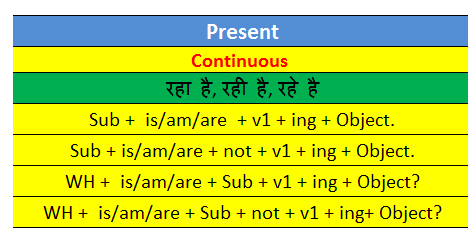
अमित सर: इसे समझना बच्चों का खेल है, रोहन! अक्सर इस Tense के हिंदी वाक्यों के अंत में “रहा है, रही है, रहे हैं, रहा हूँ” जैसे शब्द आते हैं। ये शब्द दिखाते हैं कि काम अभी अधूरा है और वर्तमान में लगातार चल रहा है; जैसे—”वह खेल रहा है” या “मैं पढ़ रहा हूँ”।
⚙️ Helping Verbs (Is / Am / Are) का सही चुनाव
प्रिया: सर, इस टेंस में तीन-तीन हेल्पिंग वर्ब्स हैं। किसके साथ क्या लगाना है, इसका शॉर्टकट क्या है?
अमित सर: इसे अपनी डायरी में हमेशा के लिए लॉक कर लो:
‘I’ के साथ हमेशा am का प्रयोग होगा।
He, She, It या किसी भी Singular (एकवचन) सब्जेक्ट के साथ is आएगा।
You, We, They या Plural (बहुवचन) सब्जेक्ट्स के साथ are लगाया जाता है।
Present Continuous Tense: Master Reference Table
आइए इस टेंस के सभी वाक्य रूपों (Sentence Structures) को उनके नियमों और लाइव उदाहरणों के साथ एक ही टेबल में समझ लेते हैं:
| वाक्य का प्रकार (Sentence Type) | वाक्य संरचना (Sentence Structure) | इंग्लिश उदाहरण (English Example) | हिंदी अनुवाद (Hindi Translation) |
| Affirmative (सकारात्मक) (Continuous) | Subject + is/am/are + V1+ing + Object | She is playing. | वह खेल रही है। |
Negative (नकारात्मक) (Continuous) | Subject + is/am/are + not + V1+ing + Object | They are not watching TV. | वे टीवी नहीं देख रहे हैं। |
| Interrogative (प्रश्नवाचक) (Continuous) | Is/Am/Are + Subject + V1+ing + Object? | Are you reading? | क्या तुम पढ़ रहे हो? (Short Ans: Yes, I am / No, I am not) |
Wh- Interrogative (Continuous) | Wh-word + is/am/are + Subject + V1+ing + Object? | Where is she going? | वह कहाँ जा रही है? |
| Wh- Neg Interrogative (Continuous) | Wh-word + isn’t/aren’t + Subject + V1+ing + Object? | Why aren’t you coming? | तुम क्यों नहीं आ रहे हो? |
⚠️ अमित सर के दो स्पेशल क्लास नोट्स (Special Rules)
रोहन: सर, क्या इसमें कोई ऐसा नियम भी है जहाँ छात्र अक्सर गलती करते हैं?
अमित सर: बिल्कुल रोहन! दो बातें हमेशा याद रखना:
नोट 1 (The ‘Who’ Rule): जब ‘Who’ (कौन) खुद ही वाक्य में सब्जेक्ट की भूमिका निभा रहा हो, तब हेल्पिंग वर्ब (is/are) सीधे उसके बाद आता है।
उदाहरण: कौन खेल रहा है? – Who is playing? (यहाँ Who के बाद अलग से कोई सब्जेक्ट नहीं आता)।
नोट 2 (Negative Interrogative): जब सवाल में “नहीं” का भाव जोड़ना हो, तो आप या तो सब्जेक्ट के बाद not लगा सकते हैं या स्पोकन इंग्लिश के अनुसार शॉर्ट फॉर्म (isn’t / aren’t) को वाक्य की शुरुआत में रख सकते हैं, जैसे—Why isn’t she playing?
🎓 Conclusion: अमित सर का मास्टर रीकैप
अमित सर: तो मेरे प्यारे दोस्तों, आज की क्लास का सार यह है कि Present Continuous का मतलब है—काम का आँखों के सामने लाइव चलते रहना। बस सब्जेक्ट देखकर सही हेल्पिंग वर्ब चुनें और मुख्य क्रिया में -ing जोड़ दें। यदि आप इन बेसिक स्ट्रक्चर्स को अच्छे से समझ लेते हैं, तो बिना किसी गलती के आसानी से खुद से अनगिनत वाक्य बना सकते हैं।
रोहन और प्रिया (एक साथ): थैंक यू सो मच अमित सर! प्रेजेंट कंटीन्यूअस टेंस का यह कॉन्सेप्ट अब हमारे दिमाग में पूरी तरह क्लियर हो गया है!
How to add ing to Verb?
मेरे प्यारे दोस्तों, अंग्रेज़ी व्याकरण (English Grammar) पर पूरी तरह महारत हासिल करने के लिए आपको सभी 12 टेन्सेस को क्रम से और गहराई से पढ़ना चाहिए। नीचे दी गई लिंक्स पर क्लिक करके आप हमारे सभी महत्वपूर्ण और विस्तृत गाइड्स को पढ़ सकते हैं: Rules, Structures, Translation Guide, and Common Uses
1. Present Tense (वर्तमान काल)
2. Past Tense (भूतकाल)
3. Future Tense (भविष्य काल)